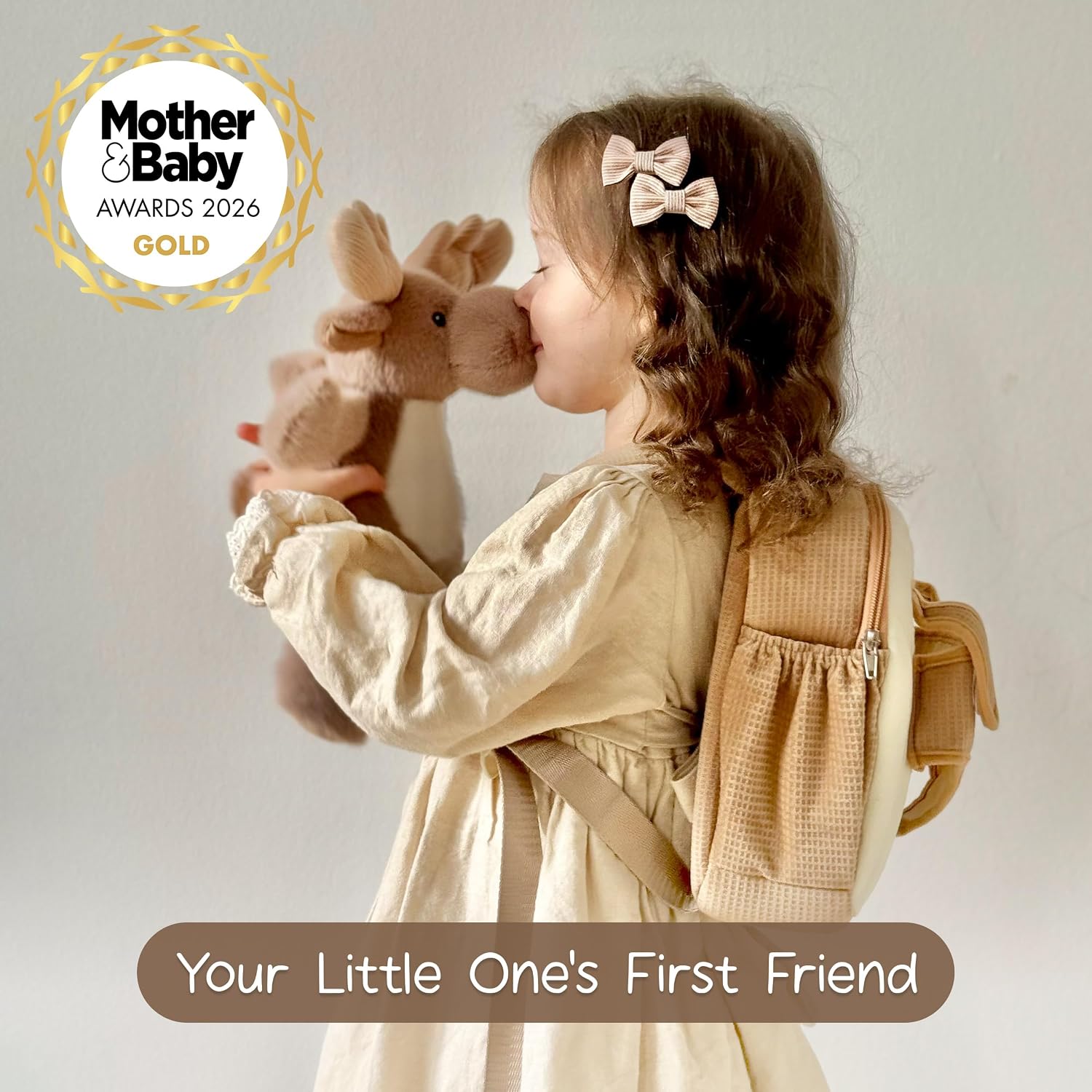
You’ve been asked to bring a gift for a baby shower or a first birthday, and you want something more useful than a onesie and more personal than a gift card. A toddler backpack gift set — that’s a small child-sized backpack (typically sized for ages 1–4, with a short back panel and lightweight frame) bundled with a few coordinating items — hits a sweet spot that parents genuinely appreciate. It’s practical on day one of daycare. It photographs beautifully. And when it’s put together well, it feels curated rather than assembled.
The challenge is the math. A single backpack can eat your entire budget. Add in filler items that don’t match, and the whole thing reads as an afterthought. This guide is for gift-givers who already know the category — you’ve bought a backpack before, you know what a name like Herschel or Pottery Barn Kids signals — but you’re trying to build something that feels cohesive at a price point that doesn’t require explanation. We’ll show you the budget split, the decision rules that make the set feel intentional, and the tradeoffs worth knowing before you commit.
Why the Bundle Beats the Single Item (and When It Doesn’t)
A $45 backpack alone is a perfectly good gift. But it reads as a single-item purchase. A $35 backpack plus a matching name tag, a small wet bag (a zippered, waterproof pouch parents use to isolate damp or soiled items), and a personalized luggage tag reads as a set — and sets photograph better, wrap better, and feel more considered.
The tradeoff: bundling forces you to compromise somewhere. Either the backpack is slightly below what you’d buy standalone, or the add-ons are thin. Here’s how to think about it.
By the numbers:
| Budget tier | Backpack allocation | Add-ons budget | What fits |
|---|---|---|---|
| $30–$40 total | $22–$28 | $8–$12 | 1–2 small add-ons (name tag, keychain clip) |
| $40–$50 total | $30–$36 | $10–$16 | 2 add-ons (wet bag + luggage tag) |
| $50–$60 total | $36–$45 | $14–$20 | 2–3 add-ons, or 1 personalized piece |
The $40–$50 range is the sweet spot. You can anchor with a recognizable mid-tier backpack, add one functional item, and still have room for a small personalized touch — a monogrammed tag, an iron-on patch, a handwritten card explaining the set.
Choosing the Anchor Backpack: The Decision That Drives Everything Else
The backpack is 70–80% of the gift’s perceived value. Get this right first; everything else is fill.
Size matters more than you think. Toddler backpacks are typically built for ages 1–5, with a back panel under 11 inches. Wirecutter’s guide to toddler backpacks notes that the most common parent complaint is bags sized too large for the child’s torso — the bag pulls backward, straps slip off small shoulders, and the child refuses to wear it. Look for a back panel length of 9–11 inches and padded, adjustable shoulder straps. If the listing doesn’t specify, check the product dimensions and compare to the child’s age.
Character prints vs. solid/neutral designs. Character prints (animals, licensed characters, dinosaurs) are high-engagement for toddlers but carry real expiration risk. A 2-year-old who loves one character at the shower may have a different obsession by the time daycare starts. Parents surveyed by BabyGearLab’s editorial team consistently flag “my kid didn’t want it after a few months” as a top disappointment for character-print bags. Unless you know the child’s current obsession with certainty, a neutral palette or a simple print (stripes, stars, a single animal motif without licensing) ages better and photographs better in milestone shots.
Material shortlist. At this price tier, you’re choosing between:
- Recycled polyester (most common in the $25–$45 range): lightweight, wipes clean, holds up well to moderate abuse. Owners across aggregated reviews consistently report easy stain removal with a damp cloth.
- Canvas (more common in boutique and Etsy tiers): heavier, more gift-like in texture, but typically $40+ for quality canvas construction. Not always worth it at the lower end of this budget.
- Nylon: durable but occasionally reads as “school supply” rather than “gift.” Better for the functional buyer than the gift-set buyer.
Named picks worth considering at this budget: Herschel Supply’s Little America Mini and Heritage toddler styles regularly appear in recommendations from Parents.com and Good Housekeeping’s backpack roundups — they photograph well, carry name recognition, and land in the $40–$55 range. Skip the cheapest options with no brand provenance; they undermine the set’s perceived value even if the quality is comparable.
Building the Add-On Layer: Function First, Then Sentiment
Every add-on should pass a simple test: Will the parent use this in the first 30 days of daycare or travel? If the answer is no, it’s filler. Filler adds weight and visual clutter to the set without adding value.
High-value add-ons (pick 1–2):
A wet bag. This is the single highest-utility add-on in the toddler category. A wet bag is a zippered, waterproof-lined pouch — typically 8”×10” or so — that parents use daily for damp swimsuits, soiled clothing, or snack containers. They’re inexpensive ($8–$15), compact, and nearly universal in their usefulness. A coordinating color or print that matches or complements the backpack elevates the whole set. Brands like Bumkins and Planet Wise appear consistently in parents.com roundups of daycare essentials.
A personalized luggage tag or name label set. This is the sentiment layer. A single leather-look tag with the child’s name engraved or a set of iron-on name labels for gear and clothing is deeply practical — daycare centers require labeled items — and personalizes the gift in a way that feels considered rather than generic. Etsy sellers typically deliver name label sets in 5–10 business days; plan accordingly. At this budget, a quality tag runs $8–$14.
A small clip-on keychain or carabiner charm. Lower cost ($4–$8), but adds visual dimension to the set when photographed together. Works best when the charm is character-free and coordinates with the bag’s color story.
Lower-value add-ons to skip:
- Snack containers or food items. Parents have preferences and allergies you may not know. Snack cups and pouches read as grocery store additions.
- Extra clothing items. Sizing is a minefield. Avoid unless you have confirmed sizing from the parent.
- Toys or stuffed animals that don’t interact with the bag. They photograph well but dilute the set’s thematic identity. If you want a plush, tuck a small one inside the bag with a note — it becomes a discovery moment rather than an add-on.
Presentation Is Half the Gift
A well-built set presented in a heap of tissue paper still reads as disorganized. A modest set presented cleanly reads as curated. Here’s the decision frame:
If budget is under $45 total: Skip the box. Nest items inside the backpack itself, with a single sheet of tissue paper. Write a card that names each item and explains its use — “the wet bag is for swim class or accidents; the name labels are for daycare drop-off.” The card does the curation work.
If budget is $45–$60: A small handled gift bag or a kraft paper tote can hold the set cleanly. If you’re adding personalization (monogramming, custom tags), let the personalization be the visual anchor — don’t over-decorate around it.
Monogram timing note: If you’re ordering a monogrammed or personalized backpack from Pottery Barn Kids or an Etsy studio, build in 10–14 business days minimum. For holiday or late-summer orders (August–September, November–December), some studios extend to 3–4 weeks. The gift loses nothing by arriving with a card that says “monogramming in progress” — but it’s worth flagging before you promise a shower date.
The Decision Rule
If X, then Y — clearly stated:
-
If the child is under 18 months and daycare isn’t imminent: Prioritize the gift-set presentation and personalization over the backpack’s functional specs. The bag is a keepsake at this stage. Spend more on the personalized tag; spend less on the bag itself.
-
If the child is 2–4 and daycare or preschool starts within 6 months: Reverse the allocation. The backpack’s durability and fit matter. Spend 75% of your budget on the bag, keep add-ons functional (wet bag over decorative charm), and confirm sizing with the parent.
-
If you don’t know the child’s current character obsessions: Default to neutral palette. A solid navy, forest green, or warm rust reads as intentional and photographs across multiple outfit combinations. Per Good Housekeeping’s editorial review criteria, neutral-palette bags consistently outperform character prints in “would buy again” sentiment among parents of children 3 and older.
-
If your budget is closer to $30: Don’t stretch it across three items. One excellent backpack and one small personalized tag is more impressive than four thin items at the same total. Quality of anchor always outweighs quantity of add-ons.
The $30–$60 toddler backpack gift set isn’t a category where you need to spend more to impress. It’s a category where the right decisions — anchor brand, add-on utility, clean presentation, and a card that does the explaining — do the heavy lifting. Get those right, and the gift lands in the “used every single day” category rather than the closet shelf.