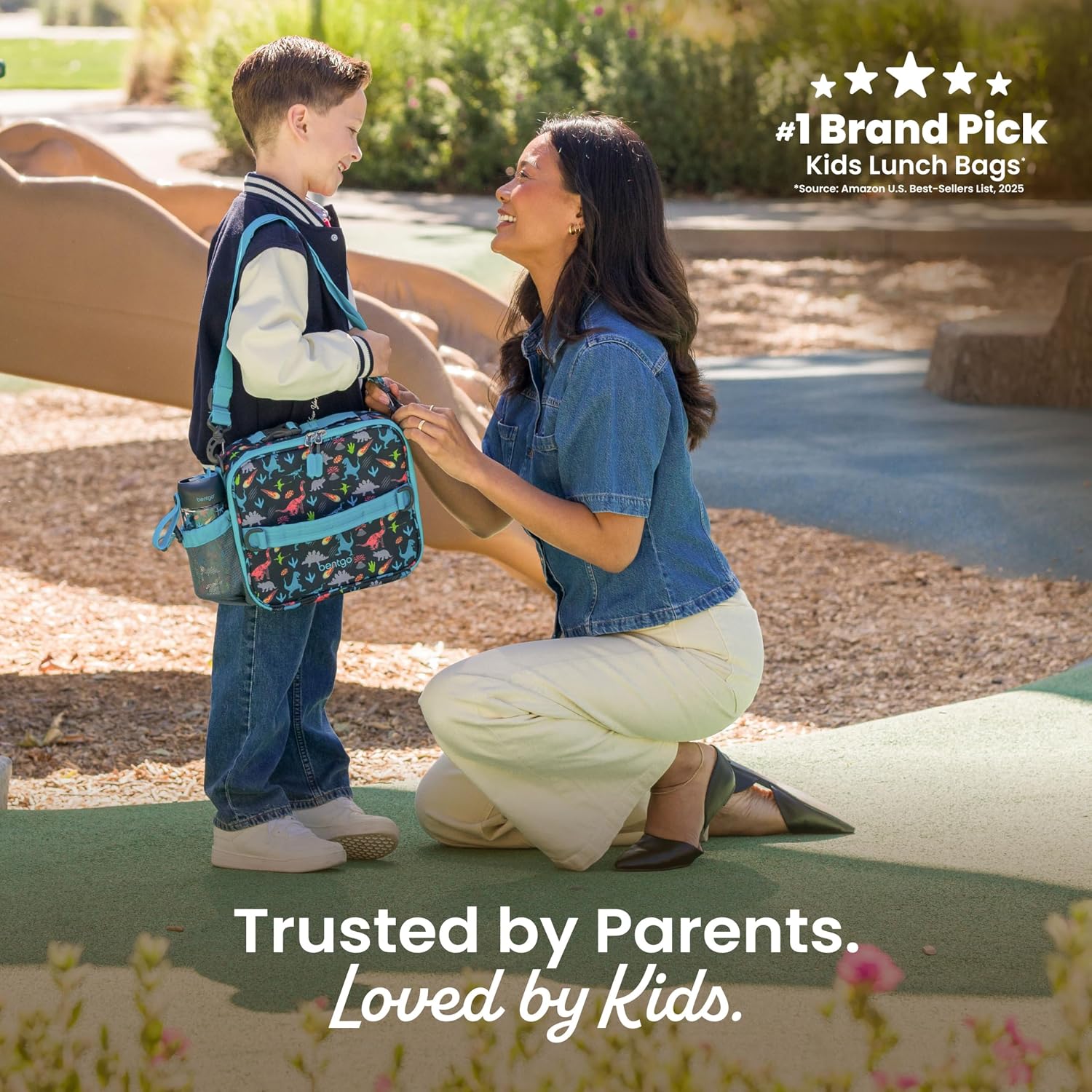
You packed something thoughtful — a real lunch, with an ice pack — and by 11:45 a.m. it was lukewarm. That’s the failure mode most parents hit within the first month of school. The problem usually isn’t the ice pack. It’s the bag itself: cheap insulation (the foam layer inside the lining that slows heat transfer) that’s too thin to maintain safe food temperatures across a two-to-three-hour window between packing and lunchtime. The USDA defines the “danger zone” for perishable food as 40°F to 140°F — and Consumer Reports’ food safety guidance makes clear that lunch items like dairy, deli meat, and cut fruit should stay below 40°F the whole time. A bag that can’t do that isn’t just an inconvenience. It’s a food safety issue. This guide breaks down what actually matters in a kids’ insulated lunch bag, names the specific models that reviewers and parents consistently flag as worth the money, and gives you a clear decision framework by budget and use case.
| EDITOR'S PICK[Bentgo Kids Lunch Bag - Durable](https://www.amazon.com/dp/B08CVV9RBT?tag=greenflower20-20) | Mid-tier[FlowFly Kids Double Decker Cool](https://www.amazon.com/dp/B07KTMXR9N?tag=greenflower20-20)… | Budget pick[FlowFly Kids Lunch box Insulate](https://www.amazon.com/dp/B0872MRWHS?tag=greenflower20-20)… | |
|---|---|---|---|
| Insulation Type | Double-Insulated | Insulated | Insulated |
| Water-Resistant | ✓ | — | — |
| Compartments | Multiple pockets | Double decker | — |
| Includes Strap | — | Adjustable strap | — |
| Material | Water-resistant fabric | — | — |
| Capacity | Holds lunch box, bottle, snacks | Large tote | Mini cooler |
| Price | $19.99 | $18.99 | $9.99 |
| See on Amazon → | See on Amazon → | See on Amazon → |
The Two Variables That Decide Whether Your Bag Works
Most parents treat lunch bag shopping as an aesthetic decision — character print versus solid color, character license versus plain. That’s fine. But if you’re choosing between two bags in the same price bracket, the variables that actually predict performance are insulation density and seal quality.
Insulation density refers to the thickness and material of the inner foam or foil layer. Bags at the $8–$14 price point often use a single layer of thin foil-laminated foam — it buys you maybe 90 minutes of meaningful cold retention. Bags in the $20–$40 range typically step up to thicker closed-cell foam or layered foil-plus-fabric construction. Wirecutter’s review of kids’ lunch boxes notes that multi-layer insulation makes a measurable difference in maintaining temperature past the two-hour mark — which is the real-world target for a child who packs at 7:00 a.m. and eats at noon.
Seal quality means how completely the bag closes — and whether that closure can take repeated, careless use from a six-year-old. A zipper that gaps at the corners or a fold-top that pops open will hemorrhage cold air regardless of how good the insulation is. BabyGearLab’s evaluation of kids’ lunch containers consistently flags wide-mouth zippers with zipper-garage pulls (where the pull tucks away so it doesn’t snag) as the most durable closure design for school use.
One thing reviewers flag less often but parents report constantly: interior lining material. Smooth, heat-welded PEVA or RPet linings wipe clean with a damp cloth. Fabric-backed foil linings wick moisture, trap odors, and start to delaminate after heavy use. If you’re choosing between two bags and one has a smooth-wipe interior and one doesn’t, choose the smooth-wipe interior every time.
By the Numbers
| Price Tier | Typical Insulation | Realistic Cold Hold | Lining Type |
|---|---|---|---|
| $8–$15 | Single foil-foam layer | ~90 min | Fabric-backed foil |
| $16–$30 | Thick closed-cell foam or dual layer | 2.5–3.5 hrs | PEVA or RPet wipe-clean |
| $35–$55 | Dense foam + heat-welded seams | 4+ hrs | Seamless wipe-clean |
These ranges reflect published specs and aggregated owner reports — not a single standardized test — but the pattern across Good Housekeeping’s 2025 roundup, BabyGearLab’s review cycle, and Wirecutter’s picks is consistent enough to treat as a reliable framework.
The Models Worth Naming (and Why)
Under $20: The Honest Workhorse Tier
The PackIt Freezable Lunch Bag is the most-cited value pick across Parents.com’s roundup and Good Housekeeping’s 2025 evaluation. The entire bag — walls included — is filled with a built-in freezable gel, so you freeze the whole bag flat overnight and it becomes its own ice pack. No separate ice pack to remember. No ice pack to lose. Owners report it holds food cold comfortably through a standard school lunch window. The tradeoff: it’s bulkier when frozen, and it needs overnight freezer time — families without a dedicated freezer shelf find it inconvenient. But for parents who can make that work, it solves the “forgot the ice pack” problem entirely.
At this tier, character-print bags from mainstream brands (think licensed prints at Target or Amazon) tend to use thin insulation and fabric-backed linings. They’re not wrong purchases — they work for a semester — but budget for replacement. For a toddler in daycare who may age out of a character license in eight months anyway, that’s a reasonable tradeoff. For a kindergartner starting a long school career, it’s worth stepping up.
$20–$40: The Tier Where the Math Changes
This is where most considered buyers land, and where the gap between good and mediocre becomes obvious fast.
The L.L.Bean Flip Top Lunch Box consistently earns high marks from owners and appears in multiple 2025 roundups for its thick insulation, easy-clean interior, and L.L.Bean’s well-known guarantee policy. Reviewers at Good Housekeeping specifically note its roomy main compartment handles a standard bento-style layout without compressing food. It’s not the flashiest option, but owners report using it across multiple school years and multiple siblings — which is exactly the math that justifies the price.
The Wildkin Kids Insulated Lunch Box earns consistent attention in this range for its dense foam insulation and reinforced zipper construction. Parents.com notes it as a reliable mid-tier pick for elementary-age kids who are rough on gear. Pattern options are broad, which helps for families where the child has strong opinions about what their bag looks like.
The Pottery Barn Kids Mackenzie Lunch Bag (available directly through Pottery Barn Kids) represents the upper edge of this tier and earns its place because of two things non-price buyers care about: monogramming availability at point of purchase and consistent multi-year durability in owner reviews. If you’re buying for a milestone — first day of kindergarten, a gift from a grandparent — this is the bag that photographs beautifully and holds up. The personalization lead time at Pottery Barn Kids currently runs 2–3 weeks during non-peak periods; during July–August back-to-school season, order 4–5 weeks out.
$40 and Up: When You’re Buying Once
The Bentgo Kids Lunch Bag in its premium configuration and the Herschel Supply Pop Quiz Lunch Box are the two names that surface most reliably when parents talk about bags that lasted through multiple children or multiple school years.
Herschel’s lunch bag earns particular attention from style-conscious families because the design language matches Herschel’s backpack line — for parents coordinating a full back-to-school kit, the aesthetic coherence matters. Wirecutter’s kids’ lunch box review notes that Herschel’s construction quality at this tier is meaningfully better than most bags in its price range, with a durable exterior fabric and a sealed, wipe-clean interior. Owners consistently report it survives the cafeteria floor — drops, kicks, being shoved into lockers — without seam failure.
At the premium tier, you’re also paying for the absence of frustration. Zippers that don’t catch. Handles that don’t fray. Linings that don’t smell like last Tuesday by week four. Those aren’t glamorous benefits, but across aggregated reviews, they’re the benefits parents cite when they say a bag was “worth it.”
The Decision Frame: If X, Then Y
Here’s how to use this research when you have a specific situation in front of you:
If your child is under 4 and in daycare: Buy in the $8–$15 range. Character licenses change fast, bags go missing, and a toddler’s lunch window is shorter anyway. The PackIt Freezable is the best single option at this tier if you have freezer space.
If your child is in kindergarten through second grade and you want to buy once: The L.L.Bean Flip Top or Pottery Barn Kids Mackenzie are the right calls. Both have durability records in owner reviews that justify the step-up price. If monogramming matters — for a gift or a milestone — go Pottery Barn Kids and build in the lead time.
If you have an older elementary or middle schooler who cares about how it looks: Herschel Pop Quiz. It’s the only option in this category that reads as legitimately cool to a nine-year-old without sacrificing function. The price is real, but owners consistently report it lasting three or more years.
If you’re a grandparent or gift-buyer: The Pottery Barn Kids Mackenzie with monogramming is the obvious answer. It ships in branded packaging, it personalizes cleanly, and it reads as a keepsake without being fussy. For a first-day-of-school or holiday gift in the $40–$60 range, it’s the closest thing to a guaranteed win this category has.
If food safety is the primary concern — you have a child with a compromised immune system, or you’re packing items that are particularly temperature-sensitive — step up to the $35+ tier and add a high-quality hard ice pack (not a gel pack, which loses temperature faster). Consumer Reports’ lunch food safety guidance recommends two ice packs for maximum margin if your child’s lunch window is close to or beyond the three-hour mark.
One Last Thing About Replacement Cycles
The honest answer most guides don’t give you: even a good insulated lunch bag has a useful life. Insulation compresses. Linings crack. Zippers wear. The bags in the $16–$30 range typically last one to two school years with daily use. The $40+ bags can last three to five. That math actually favors the higher-priced options for families planning to hand a bag down to a younger sibling — but it also means the $12 bag you buy for a toddler isn’t a failure if it needs replacing next fall. Match the expected lifespan of the bag to how long your child will actually use it, and the decision usually becomes straightforward.
The cafeteria floor is undefeated. Buy accordingly.