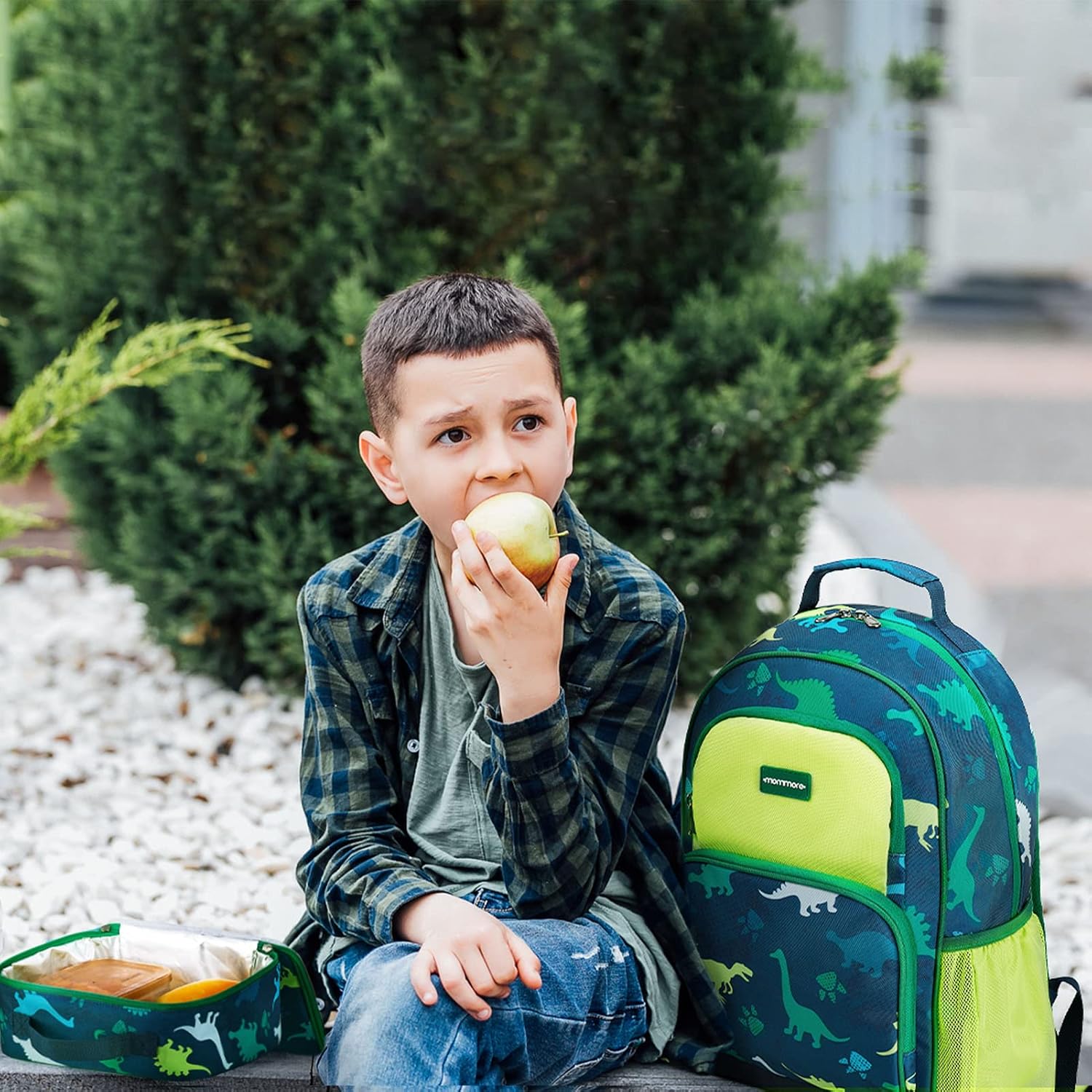
Every August, the same quiet panic shows up in parenting groups: someone bought a cool character backpack in June, then couldn’t find a matching lunch bag anywhere by the time school started. A matched set — a backpack and insulated lunch box (a soft-sided bag that keeps food cold or warm for several hours) sold together by the same brand, in the same print or colorway — solves that problem completely. You get a coordinated look out of the box, you skip the hunt, and you usually save $5–$15 versus buying both pieces separately. This guide is for parents who already know they want a set and are trying to figure out which tier makes sense — and whether the math actually pencils out at each price point.
If you’re buying for the first time, the short version is this: sets range from about $25 for a simple character-print combo all the way to $130+ for a premium canvas or structured pack with a matching insulated tote. The right answer depends on your kid’s age, how hard they are on bags, and whether you care about this thing lasting one school year or three.
| EDITOR'S PICKSimple Modern Disney Kids Lunch… | Mid-tiermommore Kids Backpack for Boys… | Budget pickBentgo Kids Lunch Bag - Durable | |
|---|---|---|---|
| Insulated | ✓ | — | ✓ |
| Pockets | ✓ | — | ✓ |
| Set includes | Lunch bag only | Backpack + lunch | Lunch bag only |
| Material | — | — | Water-resistant fabric |
| Price | $29.99 | $25.49 | $19.99 |
| See on Amazon → | See on Amazon → | See on Amazon → |
Why Sets Beat Mix-and-Match More Often Than People Expect
The obvious win is aesthetic. Wirecutter’s guide to kids’ backpacks notes that kids are more likely to take ownership of gear they feel looks “right” — and a coordinated set removes the friction of mismatched patterns that bother style-conscious kids (and their parents).
But the practical case is just as strong.
Attachment points are designed together. Many mid-range sets — Herschel’s Classic Mini plus Pop Quiz Lunch Box, or L.L.Bean’s Explorer combo — include a clip loop or carabiner slot on the lunch bag that connects directly to the backpack’s exterior lace system or grab handle. When you buy pieces separately, that hardware alignment is luck. When you buy a set, it’s intentional.
Insulation specs are matched to bag volume. A lunch bag that ships with a 14-liter backpack is typically sized for a half-day preschool schedule. One bundled with a 20–22 liter pack is usually sized for a full school day with an ice pack. Parents.com’s 2025 lunch box roundup flags this specifically — mismatched volumes are the most common complaint when parents assemble their own combos.
Warranty and return processing is simpler. If a zipper fails on a set, you contact one brand. With mixed purchases across two retailers, you’re navigating two return windows and two customer service queues.
The tradeoff: sets reduce your flexibility. If your kid wants a specific licensed character backpack from one brand and a different insulation system from another, a set won’t get you there. Sets are the right call when coordination and convenience outrank absolute optimization of each individual piece.
The Three Tiers, Compared Honestly
Tier 1 — Entry ($20–$40 for the combo)
What you get: A polyester backpack in the 12–16 liter range, usually with one main compartment and a front zip pocket, plus a soft-sided lunch bag with basic foil-backed insulation. Character prints — dinosaurs, unicorns, superheroes — dominate this tier. Think Target’s Cat & Jack line, Amazon basics-adjacent brands, and seasonal Walmart exclusives.
Who it’s for: Preschool and early elementary, ages 3–6. Kids who lose, forget, or destroy gear frequently. Daycare situations where the bag gets thrown in a cubby and sat on daily.
BabyGearLab’s 2025 evaluation report on kids’ backpacks notes that entry-tier bags typically use thinner 300D polyester versus the 600D or higher found in mid-range options. Owners across retail review aggregators consistently report the zippers on entry sets lasting one to two school years with normal use — which is exactly the lifespan most parents expect at this price.
The math: At $25–$35 for a set, you’re paying roughly $12–$18 per piece. Buying equivalent-quality pieces separately at Target or Walmart runs $14–$22 each. The set saves $5–$12 and removes the color-matching problem.
Named pick worth knowing: Pottery Barn Kids’ “Mackenzie” collection offers a small backpack and lunch bag in coordinated seasonal prints at the upper edge of this tier (~$38–$45 for the pair). Owners report the build quality sits above typical entry-tier, and the brand’s monogramming option — included at no extra charge — makes it a strong daycare gift purchase.
Tier 2 — Mid-Range ($50–$85 for the combo)
This is where most considered purchases land, and where the tradeoff calculus gets interesting.
What you get: 600D or higher polyester, padded back panels, sternum straps on larger sizes, and insulated lunch bags with sealed zipper lines (which reduce cold-air escape significantly better than open-coil zippers). Brands: Herschel Supply, L.L.Bean, Lands’ End, and Skip Hop for the younger end of the range.
Good Housekeeping’s 2025 backpack guide calls out L.L.Bean’s Deluxe Book Pack as its top pick for elementary-age kids, noting that owners consistently report multi-year use — sometimes across two or three siblings. The matching Heritage Lunch Box clips onto the pack’s exterior and uses a heat-sealed PEVA liner (a food-safe insulating material) that reviewers describe as easy to wipe clean after spills.
Herschel’s Classic Mini / Pop Quiz combo is the brand-recognition play at this tier. The set runs $75–$85 depending on colorway. Owners at this price point consistently report the quality holding up across three-plus years of school use, which shifts the cost-per-year math considerably.
By the Numbers
| Combo | Price (2026) | Expected Lifespan (owner reports) | Effective Cost/Year |
|---|---|---|---|
| Entry-tier character set | $25–$40 | 1–2 years | $15–$25/yr |
| L.L.Bean Explorer Combo | $55–$70 | 3–5 years | $12–$20/yr |
| Herschel Classic Mini + Pop Quiz | $75–$85 | 3–4 years | $20–$27/yr |
| Pottery Barn Kids Large + Lunch | $110–$140 | 4–6 years (with monogram) | $18–$30/yr |
The L.L.Bean set wins on cost-per-year math if your kid will actually use one bag for multiple years. The Herschel set wins on brand recognition and resale/hand-me-down value. Per Today’s Parent’s 2024 backpack guide, padded laptop sleeves and sternum straps start appearing reliably at this tier — both meaningful if you’re buying for a child who’ll carry a Chromebook or tablet by second or third grade.
The tradeoff at mid-range: You’re betting on longevity. If your kid switches interests between kindergarten and second grade — and statistically, most do — you may end up with a perfectly functional Herschel set that a seven-year-old refuses to wear because the print feels “babyish.” That’s not a quality failure; it’s a preference failure. It happens more at mid-range because parents are optimizing for durability over a shorter-than-expected preference window.
Tier 3 — Premium and Bespoke ($90–$200+)
What you get: Canvas or waxed-cotton construction, leather trim, structured frames, and personalization — embroidery, monogramming, custom color combinations. Pottery Barn Kids, Land of Nod-style boutique collections, and Etsy artisan shops (where a custom embroidered canvas backpack with a matching zipper lunch tote can run $120–$180 for the pair) define this tier.
This is the keepsake tier. The purchase framing is explicitly different: you’re not buying school gear that survives until fifth grade; you’re buying something that photographs well on the first day of school and potentially gets passed to a younger sibling or stored as a memory object. Good Housekeeping’s guide flags Pottery Barn Kids specifically as the dominant player here for good reason — the brand’s monogramming turnaround runs four to seven business days in normal periods, which matters when you’re planning around a specific first-day date.
Who it’s for: Gift-buyers spending $60–$150 on a milestone present. Parents for whom the bag is an intentional accessory, coordinated with a first-day outfit. Families outfitting a younger sibling with a “heirloom” piece after the older child aged out.
The tradeoff: Structured canvas and leather-trimmed sets are heavier than polyester equivalents. A Pottery Barn Kids large backpack with leather pulls runs meaningfully heavier empty than an L.L.Bean nylon pack of the same volume. Today’s Parent’s guide recommends that a loaded backpack not exceed 10–15% of a child’s body weight — a constraint worth checking against the bag’s empty weight before you buy. Owners of premium sets consistently report this as the one thing they’d reconsider.
The Decision Rule, Plainly Stated
If your child is under 6 or extremely hard on gear: buy entry-tier, accept the one-to-two-year horizon, and put the $40–$60 savings toward next year’s set.
If your child is 6–10 and you want this to last multiple years — or hand down to a sibling — the L.L.Bean Explorer combo is the clearest cost-per-year winner. The Herschel set earns its premium if brand recognition matters to your kid or the recipient.
If you’re buying as a gift, for a milestone, or for a child whose bag is a deliberate style choice: go premium, monogram it, and order at least two weeks before the occasion. Pottery Barn Kids’ monogramming deadline in late summer (typically mid-August for back-to-school) and early December (for holiday delivery) fills up faster than most buyers expect — flagging this now matters if you’re reading this before either window.
One more tradeoff worth naming directly: sets optimize for coordination, not for component-level excellence. If your child needs a specialized orthopedic pack (for a heavy load or a back concern flagged by a pediatrician), buy that pack first and match a lunch bag to it separately. The set framework is the right default for most families — but not every family is the default case.