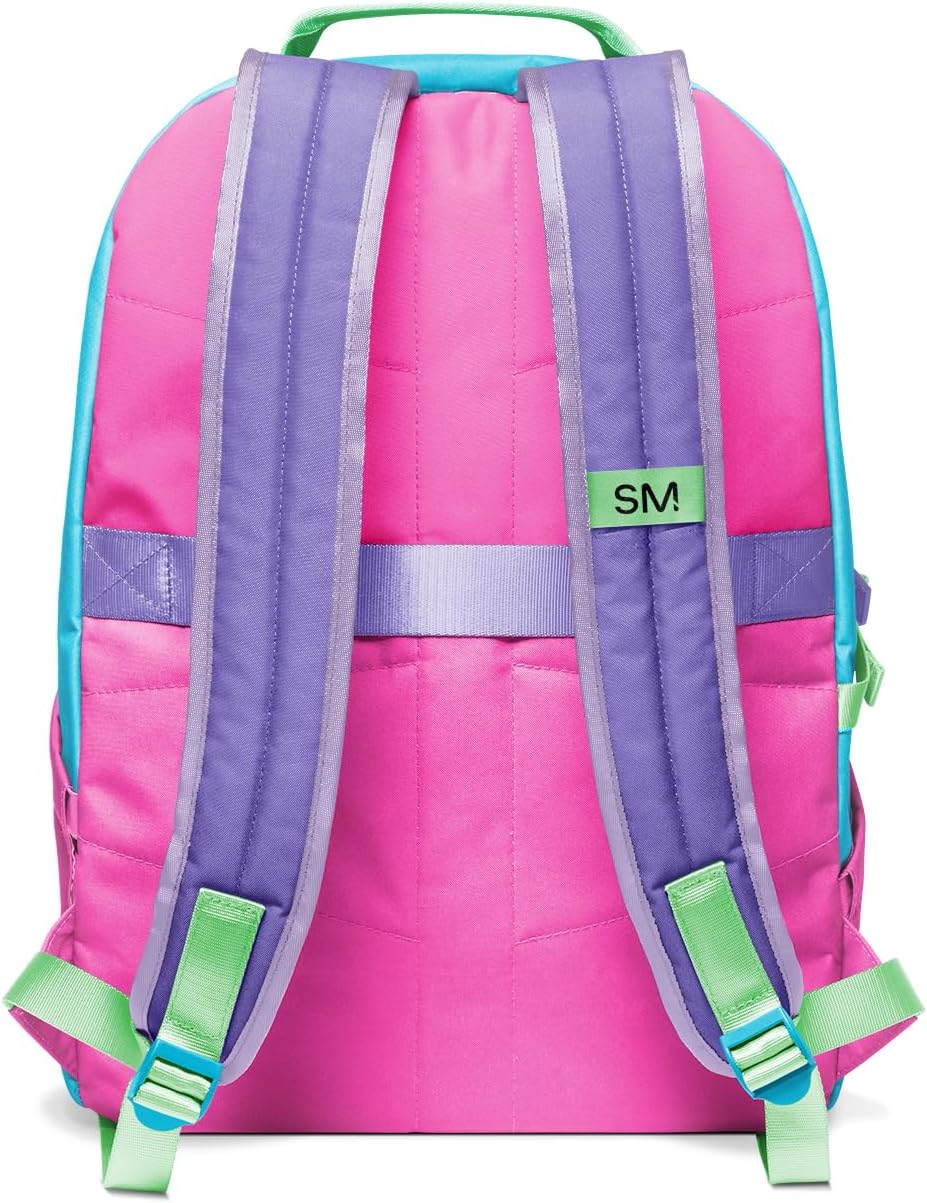
You bought the $18 character backpack at the start of kindergarten. By November, the zipper pull was gone, the straps had frayed, and the thing smelled like the bottom of a lunchbox no matter how many times you wiped it down. Sound familiar? Most parents have been here at least once — the cheap bag fails, the replacement costs time and money, and suddenly the “affordable” choice wasn’t so affordable after all. The mid-range sweet spot — roughly $40 to $80 — is where that cycle breaks. These bags are built from heavier-weight fabrics, with reinforced stitching at the stress points (the spots where straps meet the bag body) and zippers rated to open and close thousands of times without splitting. This guide breaks down the specific models worth your money for kids ages 5 to 10, what actually separates them, and how to match the right bag to your kid’s situation.
| EDITOR'S PICKOsprey Daylite Jr. Kids' Commut… | Mid-tier[adidas Creator School Backpack…](https://www.amazon.com/dp/B0CHH46VXD?tag=greenflower20-20) | Budget pick[mommore Kids Backpack for Boys…](https://www.amazon.com/dp/B0GBVX9KYR?tag=greenflower20-20) | |
|---|---|---|---|
| Lunch box | — | — | ✓ |
| Age range | — | — | 4–8 |
| Height | — | — | 15" |
| Price | $50.00 | $30.21 | $25.49 |
| See on Amazon → | See on Amazon → | See on Amazon → |
Why Mid-Range Is a Real Category, Not Just a Price Band
There’s a temptation to see the $50 backpack as “splitting the difference” between cheap and premium. It’s actually a distinct tier with a distinct value proposition.
Wirecutter’s evaluation of kids’ backpacks notes that the failure modes for budget bags almost always cluster around three points: zipper pulls that snap off, shoulder strap attachment points that pull away from the main body under load, and fabric that pills or tears when dragged across rough surfaces (bus floors, playground asphalt, school cubbies). Mid-range manufacturers specifically engineer against those three failure modes because their warranty programs make repeat failures expensive for them.
That’s why the $50–$80 bag from a brand like Herschel, L.L.Bean, or Lands’ End doesn’t just feel sturdier — it’s structurally different. The specs tell the story: heavier denier (a measurement of fabric thickness and thread density — higher numbers mean tougher fabric), YKK or equivalent zippers (an industry benchmark for reliability), and bar-tack stitching at load points.
Good Housekeeping’s roundup of kids’ backpacks also flags something parents often miss: ergonomics matter at this age more than most people assume. An ill-fitting bag shifts weight onto a child’s lower back and shoulders unevenly. Mid-range bags almost universally include padded, contoured shoulder straps and a sternum strap (the horizontal clip that connects the two shoulder straps across the chest) — features that budget bags skip entirely.
By the numbers:
- Budget tier (under $25): typically 300–450 denier polyester, single-layer straps, generic zippers
- Mid-range ($40–$80): typically 600–900 denier polyester or 12 oz canvas, padded straps, YKK or equivalent zippers
- Premium ($90+): full-grain leather trim, custom hardware, lifetime warranty standard
The Contenders: What Each Brand Actually Gets Right
Herschel Little America Kids / Heritage Kids (~$55–$65)
Herschel is the brand parents keep coming back to, and the reason is consistent across aggregated reviews: the bag holds its shape. Owners report that even after a full school year of daily use — stuffed with folders, a water bottle, a lunchbox, and the random rocks a seven-year-old collects — the main compartment doesn’t sag or warp.
The Heritage Kids (sized for ages 5–8, roughly 14.5L capacity) and the Little America Kids (slightly larger, better for third grade and up) both feature the brand’s signature striped lining, which parents cite as genuinely useful for spotting small items inside a dark bag. The zippers are smooth and kid-operable, which matters enormously — a child who can’t independently open their own bag is a problem every teacher notices.
One honest tradeoff: Herschel bags don’t have an external water bottle pocket on most of their kids’ silhouettes. If your kid’s school requires a bottle to live in an outside sleeve (so it doesn’t leak on homework), this is a real limitation. Parents who need that feature should look elsewhere or plan to use a clip-on bottle holder.
Wirecutter’s kids’ backpack coverage has consistently flagged Herschel as a strong all-rounder at this price point, particularly for kids who care what their bag looks like — the design vocabulary is cool enough that third-graders don’t complain about wearing it.
L.L.Bean Original Book Pack (~$40–$50)
This is the workhorse pick. It’s not the flashiest bag in the room, but Parents.com’s coverage of kids’ backpacks highlights it as a perennial favorite precisely because it’s over-engineered for its price. The Original Book Pack has been in continuous production for decades, and the current version uses a rugged 420-denier Cordura-like nylon — lighter than it sounds but genuinely abrasion-resistant — with a reinforced bottom panel that survives being dropped and dragged.
What L.L.Bean gets uniquely right at this tier: the side water bottle pockets are deep and wide enough to actually hold a 20 oz insulated bottle without falling out. Owners consistently report this as the feature they didn’t know they needed until they had it.
The bag also benefits from L.L.Bean’s lifetime guarantee, which in practice means free repairs or replacement on manufacturing defects. That shifts the real cost calculation: a $45 bag you replace once isn’t better value than a $45 bag that lasts three years and gets repaired free if the zipper fails.
Sizing note: L.L.Bean offers the Book Pack in small (ages 5–8) and medium (ages 8–12). The small is genuinely small — right-sized for a kindergartner, but parents of big five-year-olds may want to size up immediately.
Lands’ End ClassMate Backpack (~$45–$60)
Lands’ End occupies an interesting position: it’s the most “parent-brained” of the three brands, which is either a strength or a weakness depending on your kid’s age. The ClassMate’s internal organization is exceptional — a padded laptop/tablet sleeve (useful by second or third grade), a front organizer pocket with a key clip, and multiple internal slip pockets. For a parent who needs to know their kid’s permission slips and pencil case aren’t floating loose in one big cavern, this is the bag.
BabyGearLab’s assessment of kids’ backpacks notes that Lands’ End consistently scores well on ergonomic fit, particularly the adjustable shoulder strap length and the cushioned back panel. For a child who’s growing fast or who you’re buying for slightly ahead of size, the adjustability window is real and useful.
The tradeoff is durability relative to L.L.Bean. Owners report the Lands’ End fabric holds up well but the zipper pulls on the organizer pocket can feel plasticky after heavy use. It’s not a bag that fails catastrophically; it’s a bag that shows wear more visibly than the Bean pack after two full school years.
Where Lands’ End wins cleanly: monogramming and personalization. The brand offers in-house embroidery on most backpack styles, with relatively fast turnaround — important context for back-to-school season, when Wirecutter and Good Housekeeping both note that personalized orders can take two to three weeks during peak August rush.
The Decision Frame: Which Bag for Which Kid
You know your situation better than any guide does. Here’s how to apply what’s above.
If your kid is hard on gear — drags the bag on the ground, loses zipper pulls, leaves it outside — go L.L.Bean. The fabric construction and lifetime repair policy are built exactly for this profile. The lower price point also makes you feel less anxious watching them treat it like a laundry bag.
If your kid is in second grade or above and cares about aesthetics — won’t wear something that looks “babyish,” has opinions about whether their bag matches their water bottle — go Herschel. The brand’s design credibility at this age is real. A child who likes their bag takes better care of it, which changes the durability math entirely.
If you’re buying for a child who needs organization help — a kid with ADHD, or just a kid whose teacher has asked you to help them keep materials separated — go Lands’ End. The internal structure does real work. Also the right call if you want to personalize the bag for a gift.
If you’re buying for a kindergartner or first-grader specifically: size down aggressively. All three brands offer smaller silhouettes, and the research from BabyGearLab consistently flags oversized bags as a genuine comfort problem at ages 5–7. The American Academy of Pediatrics recommends a loaded backpack weigh no more than 10–20% of a child’s body weight — a correctly sized bag makes that easier to hit.
A Note on Timing and Personalization Lead Times
If you’re reading this in spring or early summer with back-to-school in mind: this is the right window to act. Personalized bags — embroidery, monogramming, custom patches — run two to four weeks in the August peak season at most retailers. Ordering in June or early July gets you ahead of that crunch.
Pottery Barn Kids also deserves mention here as a personalization destination at the premium edge of this tier. Their Classic Mackenzie backpack runs $60–$75 and the embroidery is done well, but the main structural bag is lighter-weight than L.L.Bean or Herschel. It’s the right call if the gift presentation and personalization matter as much as the bag’s working life — think milestone gifts, first-day keepsakes, or grandparent purchases. For a bag that has to survive 180 school days of actual abuse, L.L.Bean is still the sturdier choice.
The Short Version
Mid-range backpacks earn their price by solving the three specific ways cheap bags fail: zippers, straps, and fabric. Between L.L.Bean, Herschel, and Lands’ End, you’re not choosing between good and better — you’re matching a design to your kid’s actual profile. The durable workhorse, the cool kid’s bag, and the organized kid’s bag are all in this tier. Pick the one that fits the child, not the one with the best packaging.