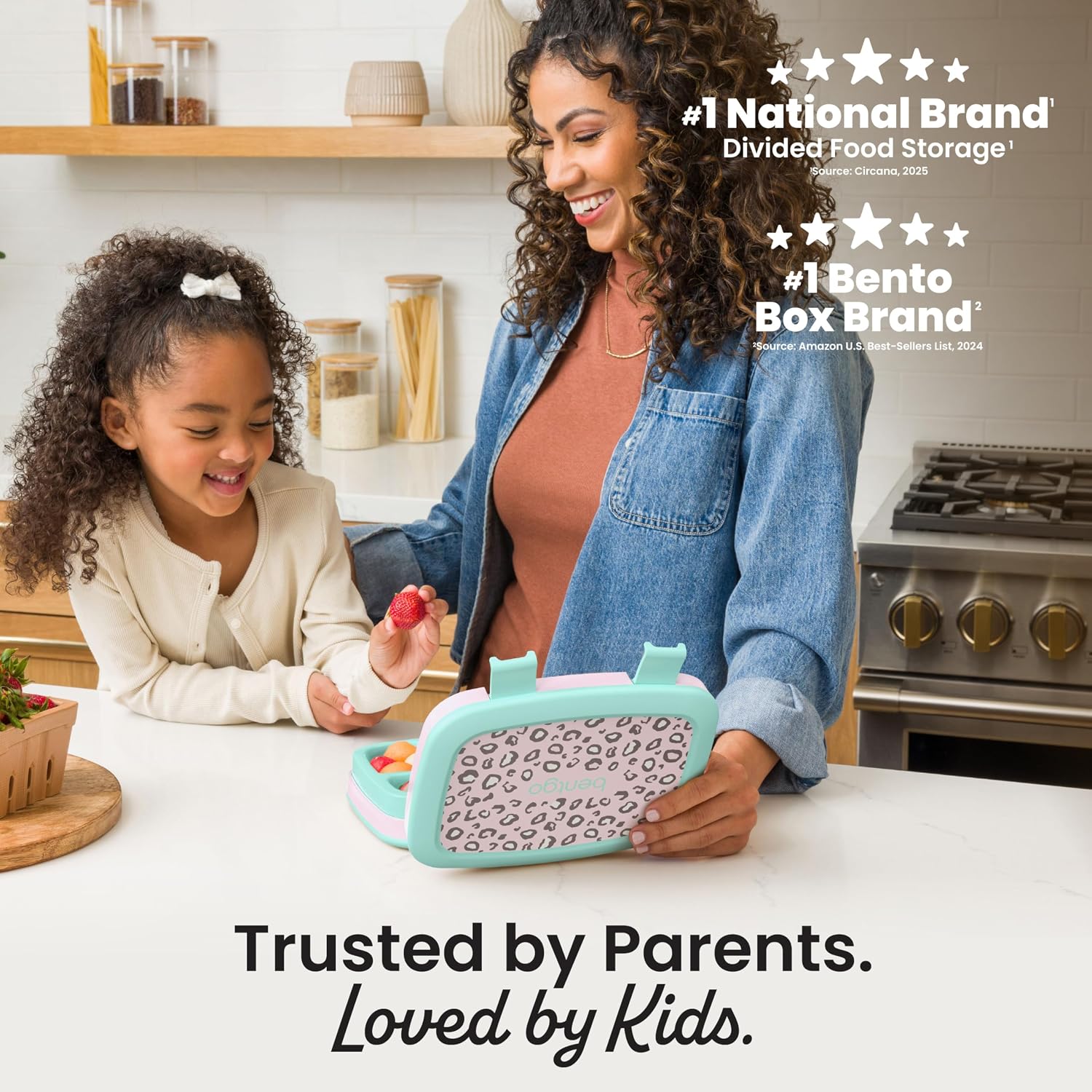
You already know what a bento box is — a divided lunch container where each section holds a different food. But once you’re standing in front of a dozen options, the compartment count starts to feel like a real decision. Two sections? Five? Does the number actually matter, or is it just marketing? It matters more than you’d expect. The wrong compartment count creates waste (food your kid ignores because it touches something else, or portions that don’t fit their appetite), packing frustration, and a lunch that comes home mostly uneaten. This guide gives you a clear framework for matching compartment count to your child’s age, appetite, and school setup — so you stop second-guessing and start packing lunches that actually get eaten.
Why Compartment Count Is a Real Variable, Not a Gimmick
The bento format (originating in Japanese packed-lunch culture, where separating foods by type is a deliberate practice) made its way into Western kids’ lunch culture gradually — but it accelerated sharply as parents sought alternatives to disposable bags. Today it’s the dominant format for school lunches across the $15–$60 price range.
Here’s the thing most buying guides skip: compartment count isn’t just about variety. It drives three practical outcomes.
1. Food separation anxiety. Younger kids — broadly, ages 3–7 — are disproportionately bothered by foods touching. Wirecutter’s guide to kids’ bento boxes flags this as one of the top parent-reported frustrations with lower-compartment boxes: a two-section box works until hummus migrates into the crackers and the whole thing gets rejected. A lidded sub-compartment or a leak-resistant divider wall is the fix, and that requires either more compartments or a box with a tight inner seal.
2. Portion calibration. More compartments enforce smaller portions per section. A 5-year-old needs roughly 1,200–1,400 calories per day (per the USDA Dietary Guidelines for Americans, 2020–2025), and lunch accounts for roughly a quarter of that. A 3-compartment box with a large main well and two small sides maps naturally onto an entree-plus-two-snacks structure. A 5-compartment box pushes toward snack-plate territory — fine for a grazer, frustrating for a kid who wants a substantial sandwich.
3. Packing speed. Every additional compartment is another decision. Parents in the BabyGearLab coverage of kids’ lunch containers note that boxes with more than 5 compartments tend to slow down morning routines and create more components to clean. The premium 5-compartment stainless boxes look great in the store and fall apart as a daily habit by October.
The Age-Based Decision Frame
This is where the math gets specific. Here’s a plain-language breakdown by developmental stage.
Toddlers and Preschoolers (Ages 2–4): Go with 3–4 Compartments
At this age, variety is more important than volume. Small appetites and strong texture preferences mean you want multiple small-portion slots — a few cubes of cheese, a handful of blueberries, some crackers — rather than one big main section. A 3-compartment box gives you fruit / protein / starch without overwhelming the packing decision. A 4-compartment box adds a slot for a dip or a sweet bite.
Good Housekeeping’s review panel specifically highlights the PlanetBox Rover as a 5-compartment stainless option that earns praise from parents of younger kids for its magnet latch (easier for small hands than flip clips). But reviewers there and at Parents.com note a consistent pattern: most toddlers don’t fill more than 3–4 of those compartments anyway. You’re not losing anything by going simpler.
The one constraint that overrides everything here: daycare and preschool allergy policies. Many programs prohibit tree nuts and require foods to be in sealed, labeled containers. Check your school’s rules before you buy — some 3-compartment boxes with loose lids won’t pass muster.
Early Elementary (Ages 5–8): 3 Compartments Is the Workhouse Number
This is the core bento-buying cohort, and 3 compartments is the number that consistently earns the best “lunch actually gets eaten” outcomes in aggregated parent reviews across Wirecutter and Parents.com coverage.
Here’s why: at this age, kids want a “main” and two “sides.” The mental model of a sandwich or wrap plus fruit plus something crunchy maps perfectly onto a 3-section layout. Boxes in this tier — the OXO Tot, the Bentgo Kids, the Yumbox Original — are sized for appetites that are bigger than a toddler’s but not yet hungry-all-the-time middle schooler territory.
The Yumbox Original (5 compartments, ~$35 at direct retail) is frequently cited in parent reviews as a case where more compartments work because the sections are genuinely small — it functions like a snack plate, and kids in the 5–7 range respond well to the “little bites of many things” format. But Wirecutter’s guide notes that the portions can feel insufficient for hungrier 7–8-year-olds by second semester.
By the numbers:
| Age Range | Recommended Compartments | Avg. Portion Volume Needed | Price Sweet Spot |
|---|---|---|---|
| 2–4 years | 3–4 | ~400–500 mL total | $18–$35 |
| 5–8 years | 3–5 | ~600–750 mL total | $25–$45 |
| 9–12 years | 2–3 (larger wells) | ~900–1,100 mL total | $30–$55 |
Volume estimates are editorial aggregations from published product specs and USDA portion guidance; individual appetites vary significantly.
Tweens and Older Kids (Ages 9–12): Fewer Compartments, Bigger Wells
By this stage, food-touching anxiety has usually receded, appetites are larger, and kids want real portions — not snack plates. A 2-compartment container with a large main section and one side well is often a better fit than a 5-slot bento, which can feel childish and simply doesn’t hold enough food.
BabyGearLab’s testing framework for lunch boxes notes that older kids consistently rate carrying convenience and lid security above compartment count. A leak-proof 2-section box that fits inside a standard L.L.Bean backpack front pocket beats a 5-compartment box that bulges or requires its own separate bag.
The Tradeoffs Nobody Talks About
You’ve probably gotten advice from other parents, seen the influencer-packed bento boards, and have a brand or two on your list. Here are the decision points that don’t make the Instagram caption.
Leak-proofing degrades with more compartments. This is a structural reality. Every internal divider wall is a potential failure point. Boxes with 5+ compartments that claim to be fully leak-proof are almost always leak-resistant in practice — meaning yogurt stays in its lane on a flat surface but not necessarily upright in a backpack. Wirecutter’s methodology for evaluating kids’ bento boxes includes upright-orientation testing, and the pattern is consistent: fewer compartments correlates with better real-world leak performance.
Stainless vs. plastic is a compartment question, too. Stainless interiors — like the PlanetBox or LunchBots lines — don’t stain and don’t absorb odors, but they can’t be molded into as many sub-compartments without seams that trap food. Most high-compartment (5+) stainless boxes use removable silicone dividers, which are a cleaning burden. Plastic boxes like the Bentgo Kids can be injection-molded into fixed 5-compartment layouts that clean up faster — but they scratch over time and some parents have migrated away from plastic-forward options as BPA-adjacent chemistry concerns persist. Parents.com coverage of the category notes this tradeoff directly: stainless is the long-term value play, but plastic wins on day-to-day convenience for younger kids.
Personalization and compartment count. If you’re buying this as a gift — first day of school, milestone birthday, holiday giving — the compartment question interacts with the gift-readiness of the item. A monogrammed Pottery Barn Kids bento set or a custom-embroidered lunch tote from an Etsy artisan is a beautiful gift, but verify that the box inside the set matches the recipient child’s age. A 5-compartment toddler bento gifted to a 9-year-old reads as a mismatch. If you’re ordering personalized versions, note that Pottery Barn Kids typically flags lead times of 2–3 weeks for embroidered items — in July and August, that window extends. Order by early August for back-to-school, and by late November for holiday delivery.
The Decision Rules
If you’ve read this far, you’re ready to close. Here’s the “if X, then Y” frame.
If your child is under 5 and has food-texture or food-touching sensitivity: Choose a 4–5 compartment box with hard divider walls (not just a liner), and prioritize a box where each section has its own sealed edge. The Yumbox Panino or Tapas sizes are frequently cited for this use case in parent reviews at both Good Housekeeping and Parents.com.
If your child is 5–8 and eats a standard “main + sides” lunch: A 3-compartment box in the 600–750 mL range is your answer. Don’t overcomplicate it. The Bentgo Kids and OXO Tot are perennial picks in this lane.
If your child is 9+ and just wants a big lunch that doesn’t leak: Go 2-compartment, larger capacity. Lean stainless. Accept that it looks less “bento-y” and more like a classic container — because that’s what works.
If you’re buying as a gift and don’t know the child’s age well: Choose a 3-compartment box in the $30–$45 range with a clean design (not character-print, which ages out fast). Monogram it if you can. That combination works from age 4 through age 10 and photographs well for the obligatory first-day-of-school shot.
If back-to-school season is underway (July–August) or holiday shipping windows are tightening: Order personalized or embroidered versions immediately. Non-personalized boxes are in-stock at L.L.Bean, Pottery Barn Kids, and direct-to-brand sites through most of the season, but the moment a color or print sells out, it’s gone until next year.
The bento box you buy today is realistically a 2–3 year purchase if you choose a stainless or high-quality plastic option. Match the compartment count to where your child is right now, not where they’ll be eventually — a 4-year-old who gets a toddler-calibrated bento and actually eats their lunch is a better outcome than a beautiful 2-compartment adult-coded box that comes home full because nothing was separated the way they like it.
Sources consulted: Wirecutter, “The Best Bento Boxes for Kids”; Good Housekeeping, “Best Bento Box Lunch Boxes for Kids”; Parents.com, “The Best Lunch Boxes for Kids”; BabyGearLab, “Best Kids Lunch Box”; USDA Dietary Guidelines for Americans, 2020–2025.